Hidden Water Leaks: How to Find One Before It Costs You
The leaks you can see are the easy ones, so here's how to catch the ones you can't.
October 1, 2026 · 4 min read
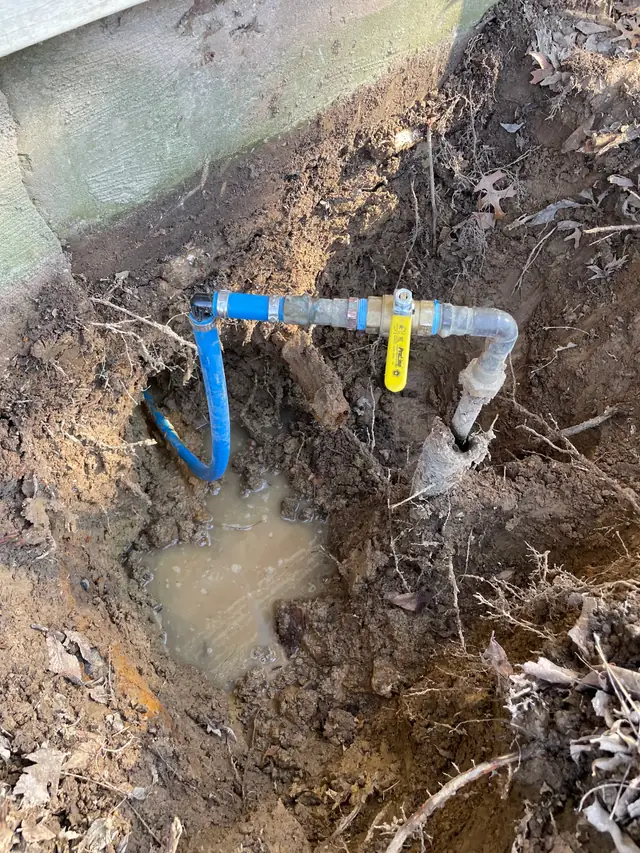
A dripping faucet announces itself. A leak in a buried line or behind a wall doesn't, and it can run for weeks while the water goes somewhere you never see. By the time most people notice, they've already paid for that water, and the ground or framing around the pipe has taken a beating. The trick is learning to read the quiet clues early. This guide covers the signs, a meter test you can do yourself, why main lines tend to fail, and how a leak actually gets found and fixed.
Clues that water is going where it shouldn't
No single sign proves a leak, but two or three together are hard to explain any other way. Watch for these:
- A water bill that jumps with no change in how your household uses water.
- A soggy or unusually green patch in the yard, especially during a dry stretch.
- Low pressure across the whole house, not just one faucet.
- The faint sound of running or hissing water when every fixture is off.
- A warm spot on a floor, or a floor that feels damp for no reason.
- Musty smells, stained drywall, or paint that bubbles and peels.
- A water meter that keeps moving when nobody is using water.
A meter test you can do yourself
This takes a little patience and no tools. Make sure nothing is using water: every faucet off, the dishwasher and washing machine idle, the ice maker not mid-cycle. Then find your water meter, which usually sits in a ground-level box near the street or the edge of your property, under a lid you can lift.
Many meters have a small leak indicator, a dial or triangle that spins when even a trickle passes through. If it's turning with everything off, water is escaping somewhere. If yours doesn't have one, write down the reading, wait an hour without using any water, and check again. A changed number tells you the same thing.
Next, narrow down where. Close the main shutoff valve at your house and look at the meter again. If it's still moving, the leak is on the buried line between the meter and the house. If it stops, the leak is somewhere inside. Toilets are the most common indoor culprit, and you can check one by adding a few drops of food coloring to the tank, waiting without flushing, and seeing whether color shows up in the bowl.
Why main lines fail
The line that carries water from the meter to your house is buried, under constant pressure, and out of sight for its entire life. Old galvanized steel corrodes from the inside until pinholes open up. Older copper can pit. Soil that swells when it's wet and shrinks when it's dry puts slow stress on a pipe, and tree roots will find a weak joint and lean on it. Water pressure that runs too high, a problem on its own, wears on every joint along the way. Add a bad repair from a past job and you have plenty of ways for a line to give out.
The symptoms of a main line problem are the ones in the list above: low pressure, a high bill, a wet yard, sometimes no water at all. Because the pipe is underground, you often can't tell from the surface exactly where it's breaking.
What finding the leak really looks like
Good leak work is diagnosis first and digging second. The goal is to confirm the actual source before anyone cuts into a lawn, a wall or a slab, because a guess means a bigger hole and a bigger repair.
Sometimes the job still means excavation. One Google reviewer, H. B. Whitaker, described Adam repairing a leak on an in-ground pool: he cut a hole in the concrete deck, dug down, found the leak and fixed it, then filled the dirt back in and cleaned up. The reviewer also noted that the clean, precise cuts would make it easier to repour the deck. That's the standard worth asking for on any dig, which is a repair that leaves the property ready for whatever comes next.
Patch a section or replace the line
Once the leak is located, the decision comes down to the pipe around it. A single leak on otherwise solid pipe is often a clean section repair. Several leaks along one run, pipe that's visibly corroded or crushed, or material that's reached the end of its life usually points toward replacing that line instead of chasing leaks one at a time. A plumber should show you what they found and lay out those options before work begins.
The LEAKFREE offer, and what to do next
A Plus Plumbing of NWA offers a Free Leak Check With Repair, code LEAKFREE. They'll confirm the source of the leak and apply the check toward the repair when you approve it. It isn't valid on prior work, and it's worth mentioning the code when you book.
If your meter is moving, your bill doesn't make sense, or the yard is staying wet, call or text (479) 305-9107. The Main Water Line Repair and Replacement page explains how diagnosis and repair work for the buried line, and it's the right place to start reading if you suspect the leak is outside the house.
A Plus Plumbing of NWA, (479) 305-9107
Call (479) 305-9107More articles
Water Heater Repair or Replacement: How to Tell Which You Need
Most water heaters give warning signs before they quit, and some of those signs point to a small repair instead of a new tank.
Frozen Pipes in Arkansas: Prevention and What to Do if One Bursts
A little preparation before a freeze, and a clear plan for the first few minutes, limits most of the damage.